


Coima Group’s expertise extends beyond dust extraction and waste management, offering a range of solutions for material compaction, the production of derived fuels, industrial painting, and air treatment. These technologies are designed to improve process efficiency, optimize resources, and address the specific requirements of any production facility.

The briquetting machine is a waste-compacting press capable of processing any type of loose shaving or chip, reducing its volume by a factor of up to 6. Compaction is achieved through the action of a hydraulic piston that pushes the material through a calibrated, pre-tensioned channel. In the case of wood waste, the resulting compressed cylinders can be repurposed for use in suitable heat-generation systems. For single-material metal waste, the briquettes can often be sent directly to a foundry, allowing for the complete recycling of the material. In instances where the waste cannot be reused, the press significantly reduces the volume it occupies, thereby lowering disposal costs. The machines are equipped with a PLC-based electrical control panel featuring a touch-screen interface, which allows for the customization of work cycles and the easy, intuitive adjustment of all operating parameters.
Pelletizing plants require a complex sequence of stages to transform raw material into high-quality pellets. We manage every step, from refining, drying, and storage to pelletizing, and much more. Each phase is carefully studied and optimized to ensure an efficient process and a final product that meets the highest standards. Thanks to our integrated approach, we offer a comprehensive service: starting with initial consulting, where we work with the client to analyze the best technical and economic solutions, through to the design of the plant’s final layout. This includes site visits, meetings, and support for the execution of civil, structural, and electrical works. We also handle assembly, wiring, commissioning, and staff training, while providing impeccable after-sales support. We offer more than just equipment; we provide a 360-degree partnership, ensuring customized, timely, and efficient solutions tailored to every requirement. Our core business extends beyond the production of machinery and accessories for pelletizing; it is focused on the creation of complete, turnkey plants.
These booths, constructed entirely from press-bent galvanized steel panels, are designed to extract and remove paint pigments and fumes generated during spray painting processes involving synthetic, organic, or water-based solvents. Paint pigments are captured via a suction wall consisting of corrugated cardboard (the first stage, for coarse filtration) followed by a synthetic fiber filter housed in easily removable drawers (the second stage, for fine filtration). An optional activated carbon filtration stage can be added to neutralize solvent odors. The interior can be lined with non-stick plastic panels, which also serve as a pre-filtration layer. Suction flow rate can be managed via an inverter, and ATEX-compliant versions are available upon request.
These booths, constructed entirely from press-bent galvanized steel panels, are designed to extract and capture pigments and fumes generated during spray painting with synthetic, organic, or water-based solvents. Paint pigments are filtered via a frontal water curtain flowing over a pre-painted galvanized sheet metal wall (the first stage of coarse filtration), followed by a droplet separator and a synthetic fiber filter (the second stage of fine filtration), both housed in easily removable drawers. Options include single or double water curtains, and the extraction flow rate can be managed via an inverter. ATEX compliance is available upon request.
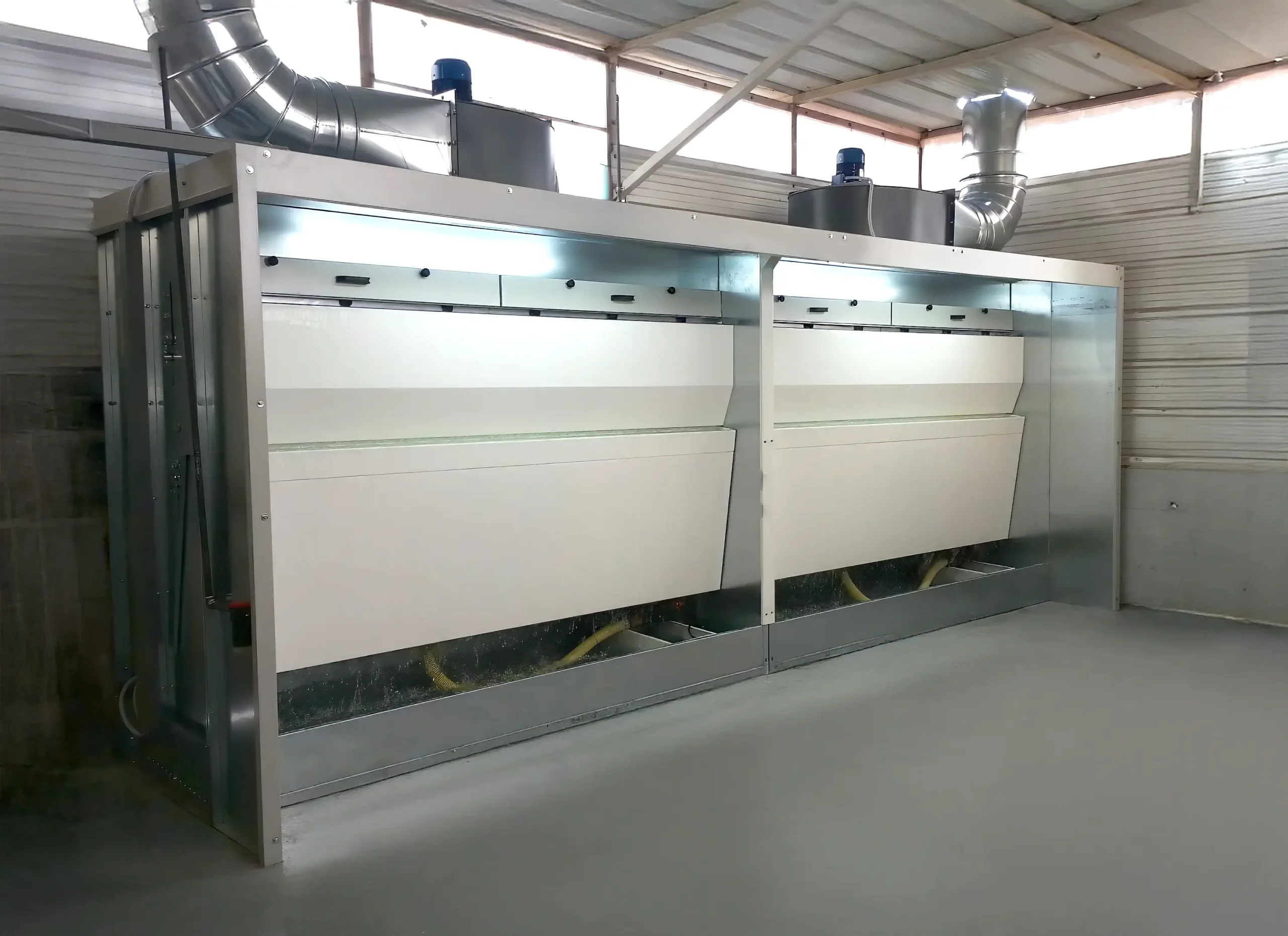

These spray booths, constructed entirely from thick, patented, non-stick plastic material, are designed to extract and capture pigments and fumes generated during spray painting processes involving synthetic, organic, or water-based solvents. In dry-type booths, the initial coarse filtration stage, which traps approximately 90% of the overspray, consists of non-stick panels that are exceptionally easy to clean. Subsequent filtration is handled by a corrugated cardboard suction wall and a synthetic fiber filter housed in easily removable drawers. An optional activated carbon filtration stage can be added to neutralize solvent odors. The extraction flow rate is automatically managed via an inverter. Compliant with ATEX regulations.
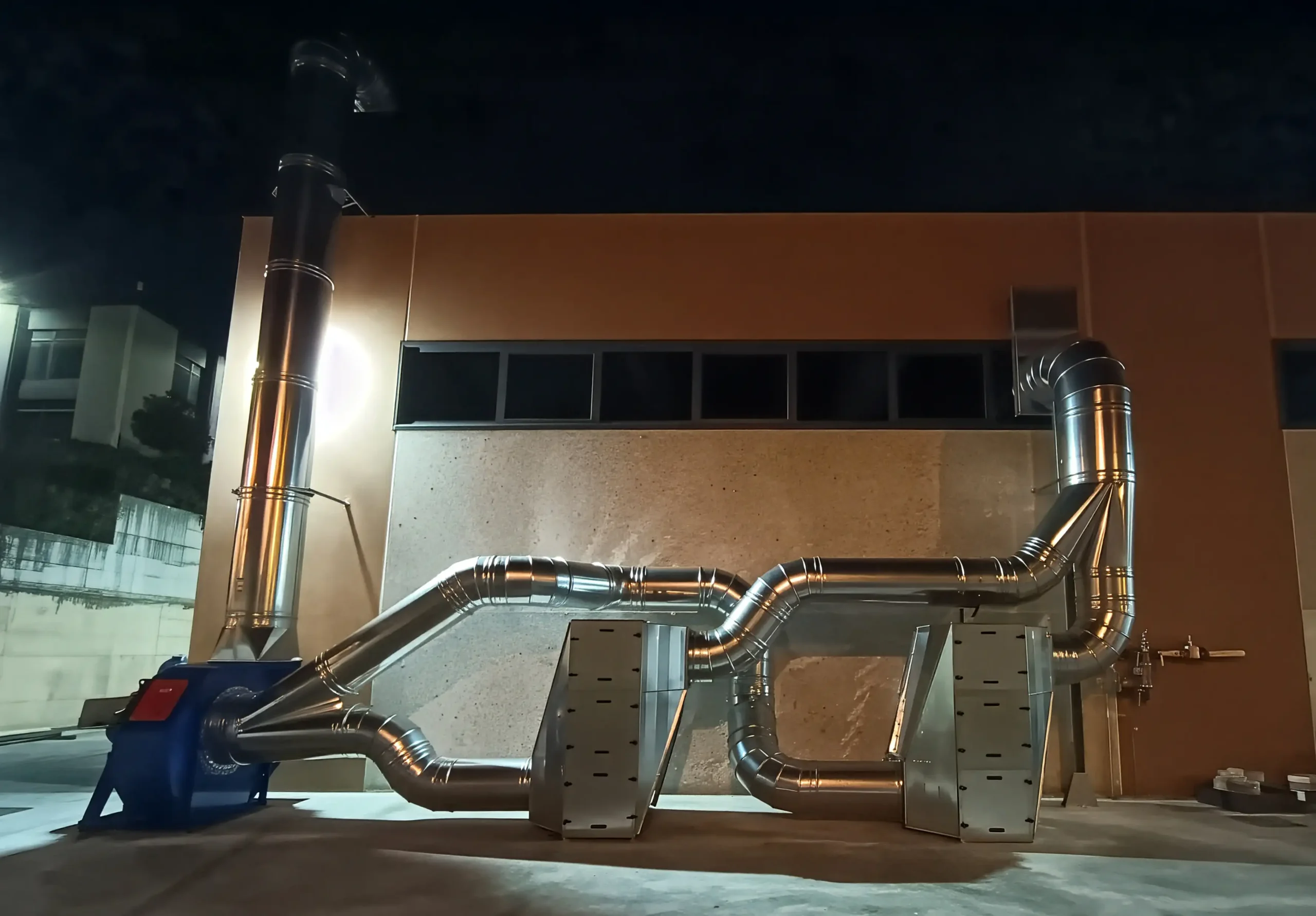
Filters suitable for the removal of odors, solvents, and other gaseous pollutants present in low concentrations. Custom-built from hot-dip galvanized steel, they feature easily removable trays for the activated carbon, ensuring simple maintenance.
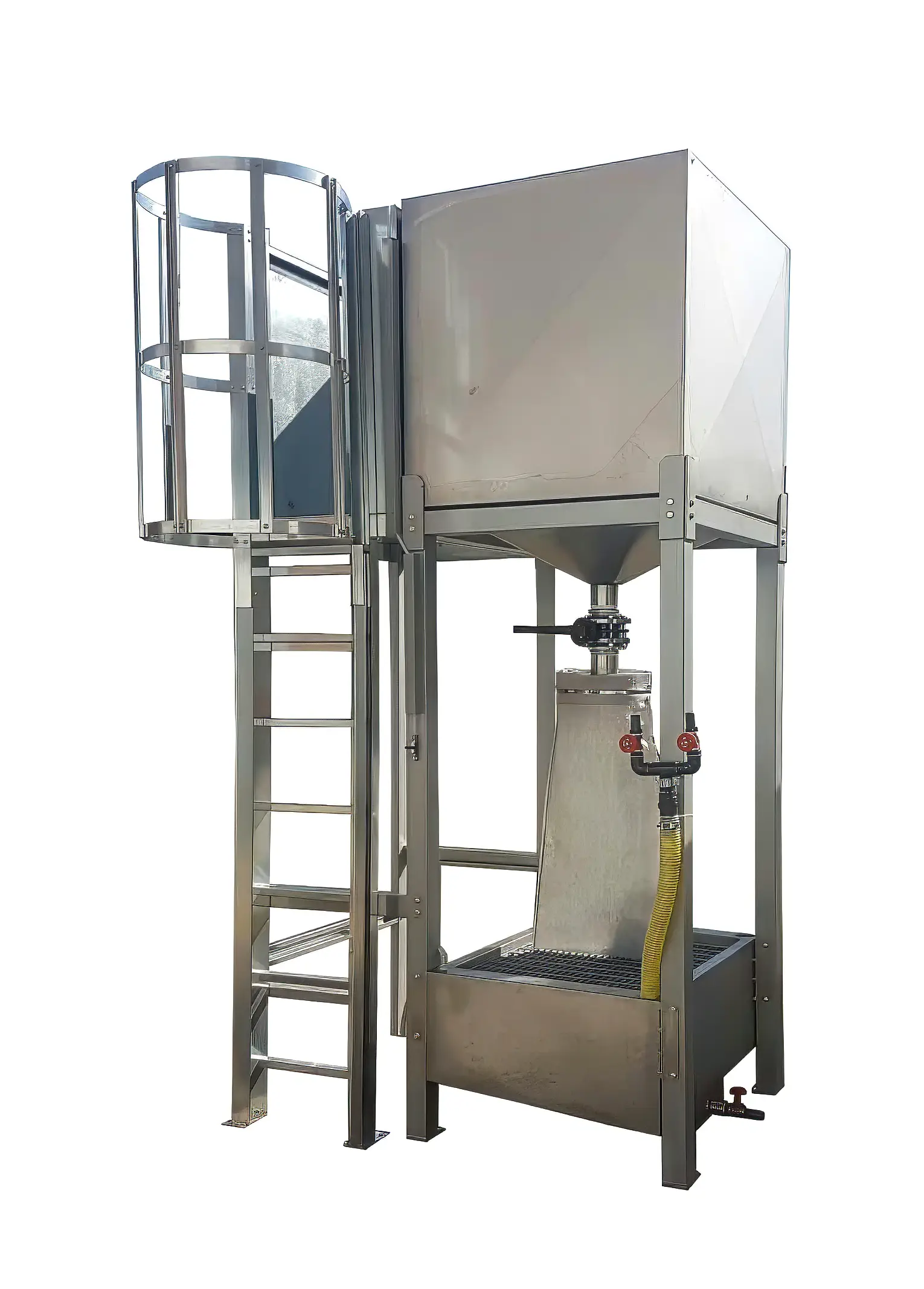
A device used to separate paint particles contained in water; it consists of a reaction tank (made of PVC or stainless steel) in which the contaminated water is treated with a flocculant, causing the particles to agglomerate and precipitate. The resulting sludge is collected in a dedicated polypropylene bag, while the purified water is recirculated and reused in the paint booth via the supplied pump.
Pulse-Jet Bag filters
Shaker Bag filters
Pulse-Jet Cartridge filters
Mini Silo
Silo
Compact filtering units
Painting booths
Pellet production systems
High-pressure systems
Briquette presses